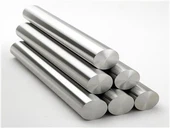
Bright annealing refers to a specific annealing process where metal materials or workpieces are annealed in a protective atmosphere or vacuum to prevent oxidation and maintain a glossy surface. This method is a crucial step in ensuring the quality of food-grade stainless steel tubes. After cold rolling at room temperature, the surface of food-grade stainless steel tubes becomes significantly harder, which can impact subsequent processing. To alleviate this hardness, high-temperature annealing is required.
During this process, the tubes are heated and annealed within an enclosed environment, allowing the temperature to gradually decrease to at least 500 degree within the same confined space, followed by natural cooling. This meticulous procedure ensures that the food-grade stainless steel tubes achieve a desirable level of brightness without incurring decarburization.
304/304L, 316/316L, 310S, 347H, 2205, 2507, 904L, etc. | |
6.35mm-50.8mm | |
0.7mm-6mm | |
1m-12m, or as required | |
T/T, L/C | |
30-60 days, or as per quantity required |
Bright annealing of food-grade stainless steel tubes serves to alleviate work hardening and achieve a desirable metallographic structure. Variations in performance requirements dictate differing criteria for the desired metallographic structure following bright annealing. Consequently, the specific bright heat treatment processes may vary based on these requirements.
Bright annealing, as a heat treatment process for food-grade stainless steel tubes within a protective atmosphere of a hydrogen and nitrogen gas blend, enables the attainment of a non-oxidized, gleaming surface. This is achieved through stringent control of the furnace's protective atmosphere, especially in terms of purity, residual oxygen, and dew point. In comparison to surfaces obtained through regular annealing and pickling, the absence of an oxidation process in bright annealing reduces the occurrence of chromium deficiency on the tube's surface. Consequently, the corrosion resistance of this surface surpasses that of a 2B surface, even after polishing, resulting in a corrosion-resistant, oxidation-free, and bright finish.
Typically, tubes subjected to bright annealing can preserve the smoothness and precision of the rolling surface, resulting in a bright finish without the need for additional post-processing. Following bright annealing, the surface of the food-grade stainless steel tube retains its inherent metallic luster, closely resembling a mirror-like finish. In most cases, the surface can be utilized directly without the necessity for further treatment.
Attain an oxidation-free, brilliant surface with excellent corrosion resistance.
The bright treatment preserves the smoothness of the rolled surface, allowing for a gleaming finish without post-processing.
High heat resistance, rendering them suitable for applications in high-temperature environments
The bright annealing process imparts a mirror-like finish to the tube, enhancing its visual appeal and simplifying the cleaning process. Bright annealed tubes are employed across numerous industries thanks to their outstanding properties:
Chemical processing: in the chemical processing sector, bright annealed tubes are employed, emphasizing the essential corrosion-resistant qualities of stainless steel. They are utilized for the transportation and processing of diverse chemicals and acids, thereby ensuring the safety and integrity of the systems.
Aerospace and automotive: the aerospace and automotive sectors reap the advantages of the precision and top-notch surface finish of bright annealed tubes. These tubes are incorporated into aircraft components, exhaust systems, and hydraulic systems, where reliability and performance are of paramount importance.
Architectural and decorative: the visually appealing mirror-like finish of bright annealed tubes positions them as a superb option for architectural and decorative purposes. They find application in crafting handrails, ornamental structures, and artistic installations.
Non-destructive test: ultrasonic test and eddy current test
Cim npe nrov: